
Hello, from India, Mom.
Dan and I have been in India for just over a week now. We began our trip in Delhi—the political capital—and are making our way down to Mumbai, which is considered the business/economic capital of India. Having been to a few spots in India prior to this trip, I had a bit of a head start in understanding the culture shock that awaited us. Dan got his first dose while touring the old town area of Delhi.
The sites, sounds, colors and smells—the sheer chaos—of India can be overwhelming. And beyond the sensory overload, the internal consternation that accompanies the experience is significant. Especially the first time.
To paint a picture for you, I’ll start by referencing the population density. India is home to 1/6 of the world’s population, nearly 1.5 Billion people. It is the most populated Country on earth. One of every six people in the world is Indian. And despite the government’s consideration of some China-inspired population control measures, there is no sign of the Indian population deminishing.
There is a baby born here every two seconds. While most families have around six children, it is not uncommon for a family to have 12. But to truly understand the plight of the Indian people, one must marry the population density with the very real economic hardship of most Indian citizens.
India is home to the world’s most well known caste system, where enormous wealth disparity prevails. Simply stated, one is born into their lot in life, and their social and economic status does not change. It is the antithesis of “The American Dream,” where one has the freedom to become what they want to be in life.
India’s extremely wealthy—the top 1%—control over 40% of the nation’s wealth, while the bottom 50% have just 3%. That means more than 750,000,000 people are struggling to survive on just 3% of the available funds in the Country. In fact, the average earnings for one in the bottom 50% of the Country is the equivalent of $827.37 USD per year, or $2.26 per day. And anyone earning more than $350 Indian Rupee ($4.07 USD) a day is in the top 50% of earners in India.
The struggles of poverty here are real.
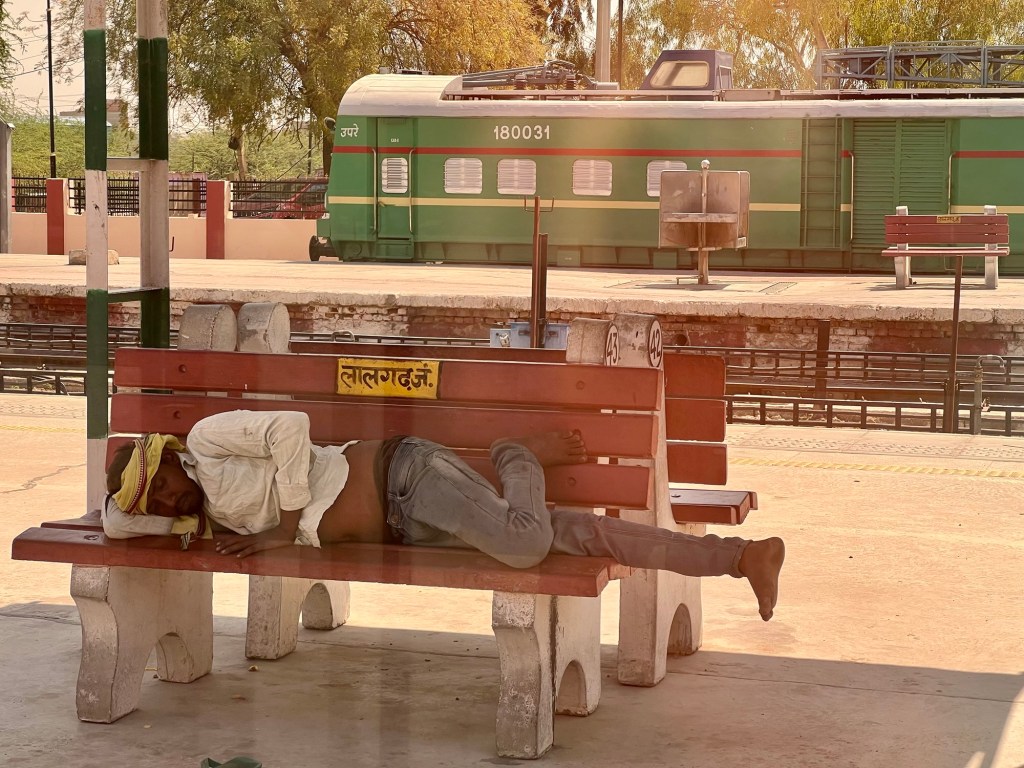
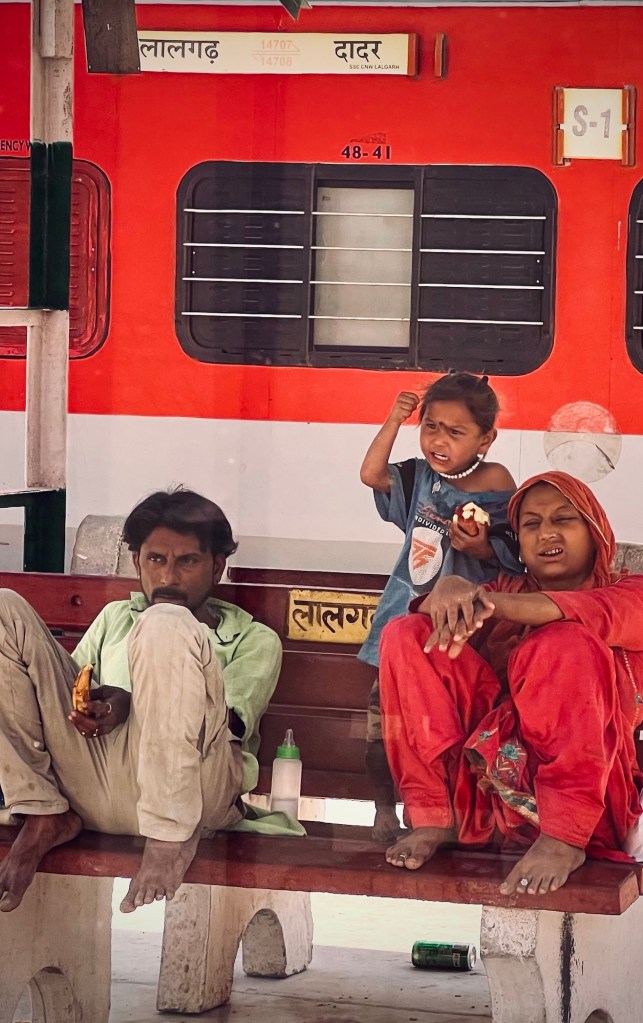
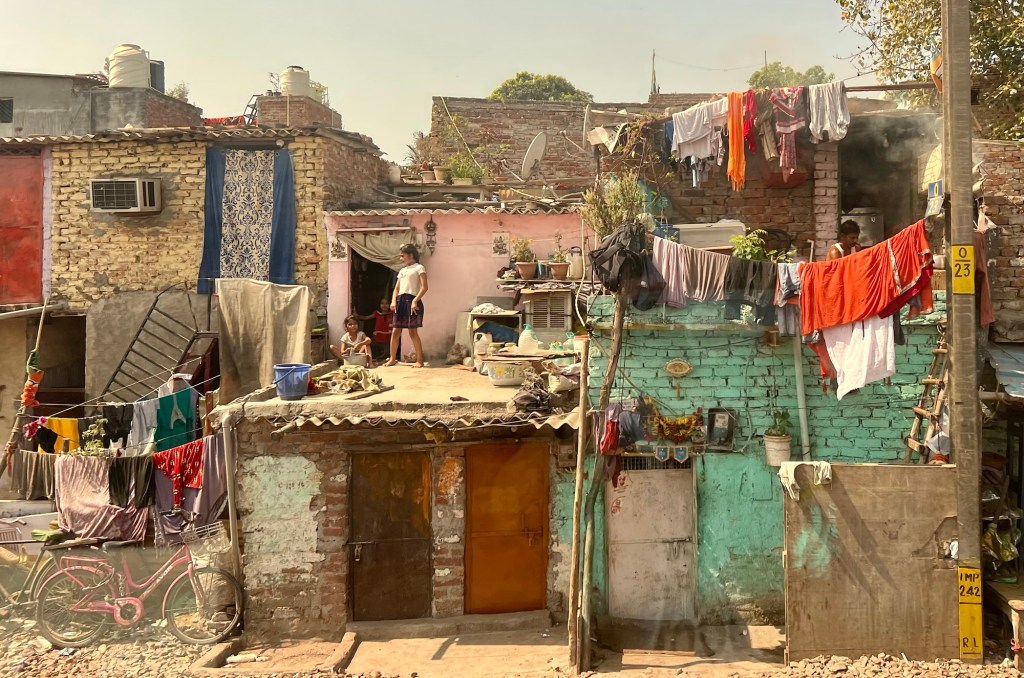
So what is it like to step into the streets of Old Delhi and spend an afternoon among the people who live there? In a word: overwhelming.
A light grey, greasy haze of air surrounds the scene. People everywhere, swimming through a caucophony of sounds—motor bikes, car horns, tuk tuks (both pedal and motorized), street vendors shouting in Hindi and Bengali and any of the other 22 languages spoken in the Country. The high pitched hum of single stroke engines, grounded with the deep roars of over-filled buses. People bump up against you, stare at you, they wave and smile (sometimes asking for a selfie with you). And there are many who beg for anything you are willing to part with.
There are people sleeping in the streets, people going to the bathroom on sidewalks and in the corners where buildings meet. Women riding side saddle on the back of motorbikes, their colorful sarees flowing in the breeze. There is trash everywhere. There are random individual cows and oxen loose on the streets. They stand placid, with heads held high, as if they know they are sacred. Monkeys scurry along the tops of walls. Mangy looking dogs are everywhere. And the smells…..
Smells of food cooking in the make shift food carts and tiny vendor stalls, cow and camel dung pies drying in the sun and burning as the fuel source for various cooking fires, rotting mounds of garbage, tobacco spit, perspiration and unmetered exhaust fumes wafting through the air.
While walking through the streets I was reminded of an old Kenny Rogers song, The Gambler. But here, “you have to know when to hold them” would more aptly refer to holding your breath. (The near 100 degree temperatures don’t help, from an olfactory standpoint.)
Perhaps needless to say, Dan was quite overwhelmed by the entire experience. (As was I when I first experienced Mumbai.) Spending time in India is definitely eye opening, if not shocking. And it is uncomfortable in a few ways, perhaps mostly based on the realization of how very fortunate we are just to have been born where we were.
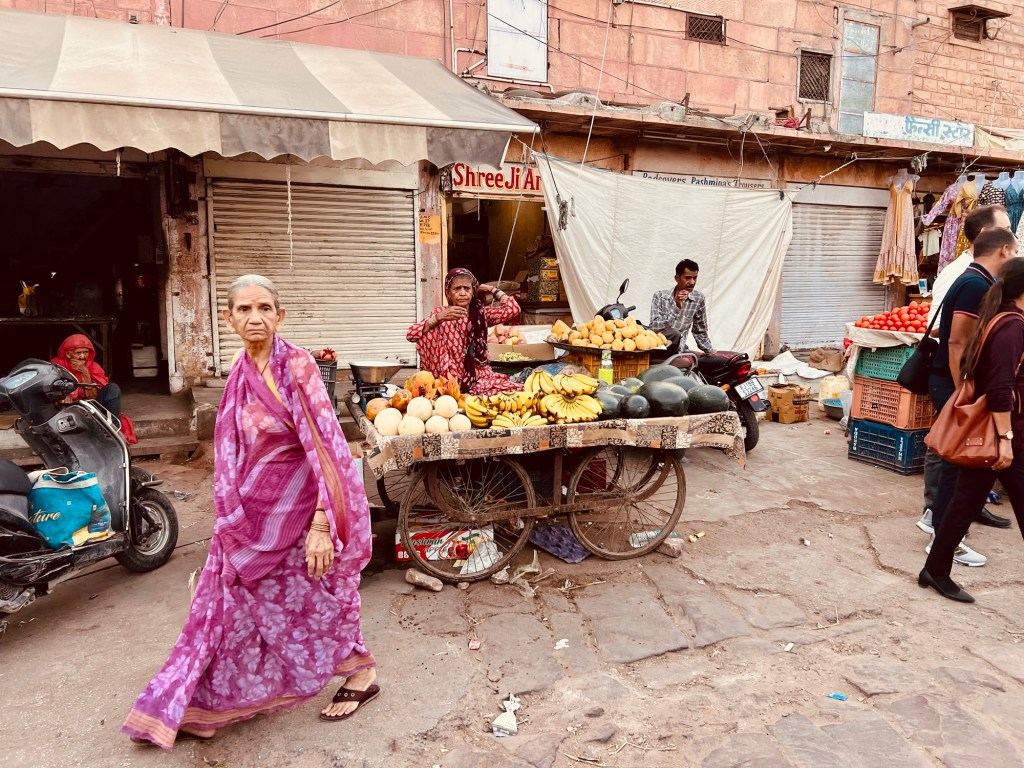
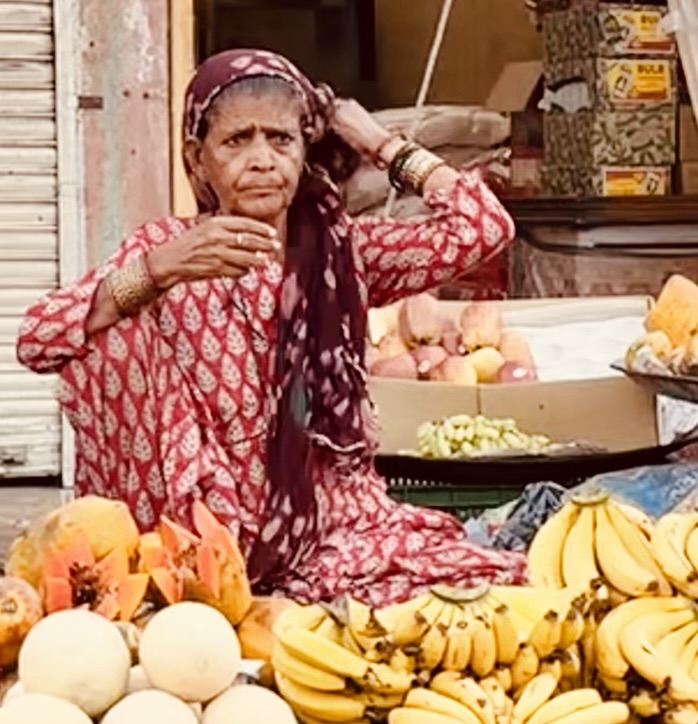

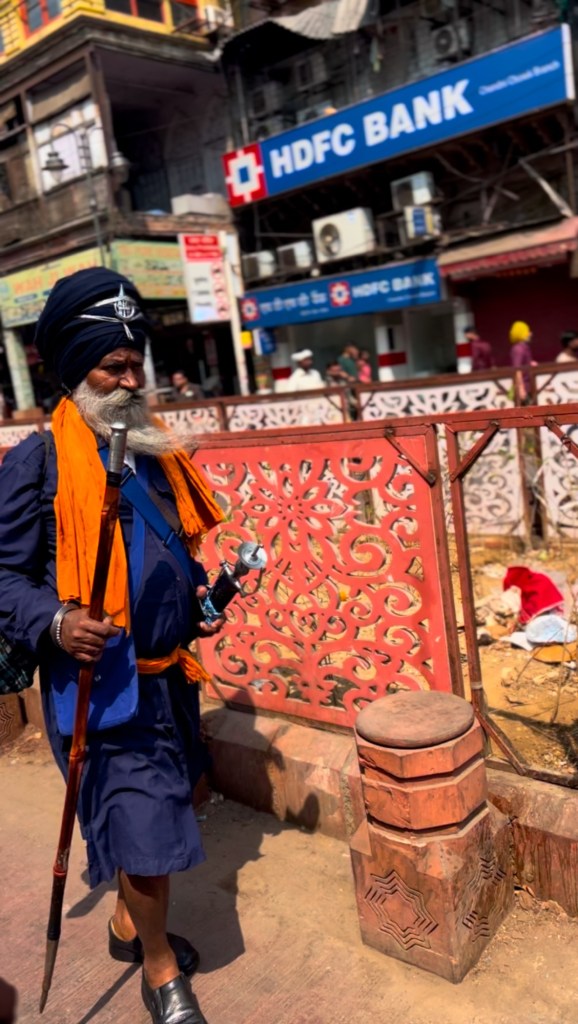

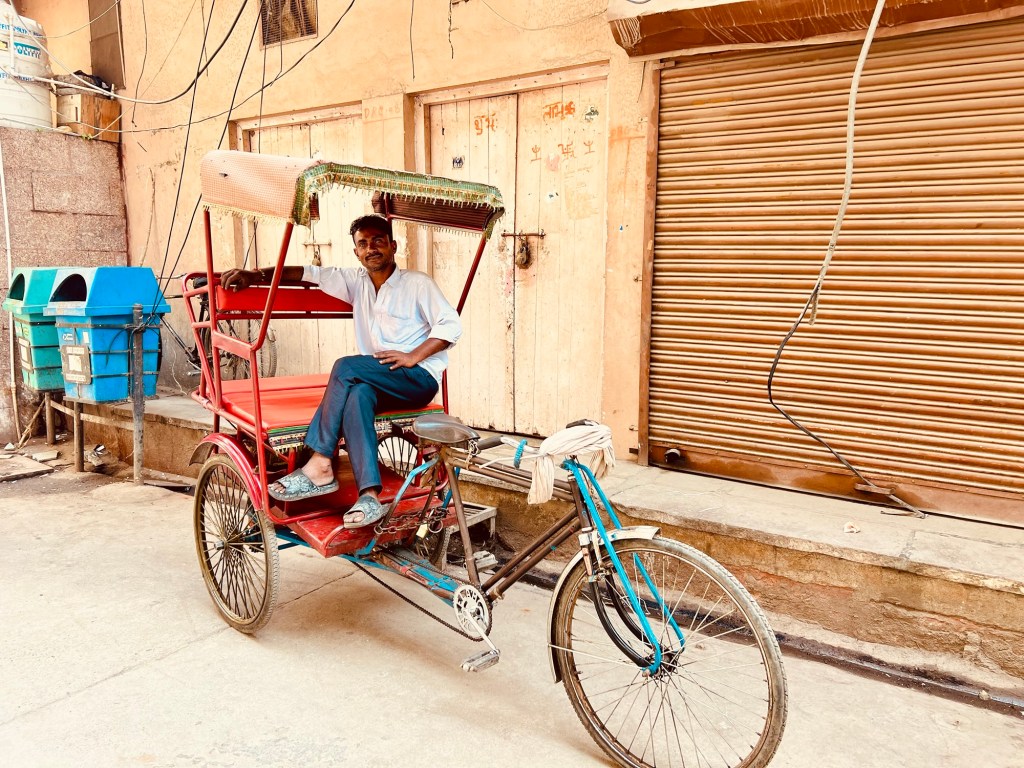


Yet among all of this chaos, there is a vibrance to Indian life that is simply unparalleled. Extraordinary bursts of color everywhere you look. Flowers and flower petals seem ubiquitous. The people are warm and kind with one another, and welcoming of us as guests. Despite the harsh life circumstances, there is a notable gentility among the people (of all classes).
So this is where I may have buried the lead. The real takeaway is that it is easy to fall in love with the people of India. As we walk through the streets, eyes light up with warm smiles; smiles that feel like a welcoming embrace. Locals gather to watch as we disembark our train to spend time in their towns and cities. They stop what they are doing to observe as we pass by on the street. Children wave, and flash enthusiastic smiles with our simple return of the gesture.
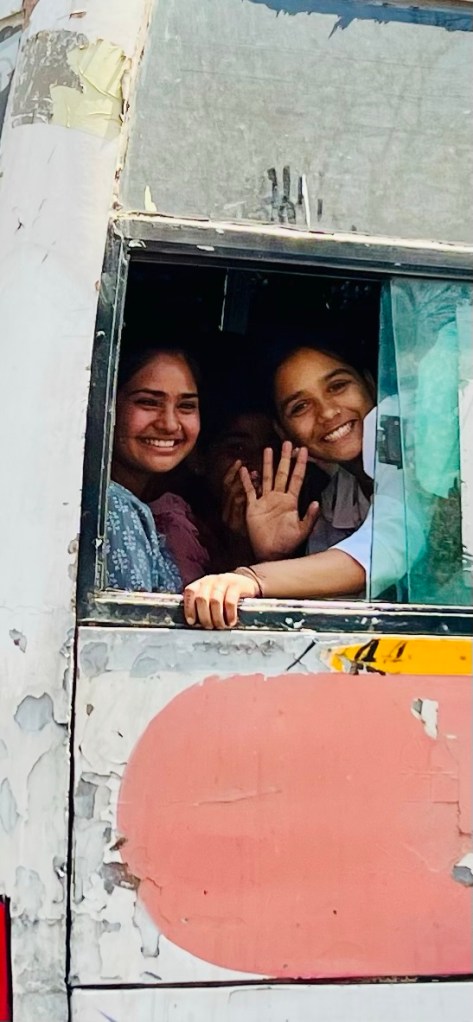


Beyond welcoming, the Indian people are fascinated with our light hair and skin. And it all feels like affection.
Until next time,
XOXO

Following is a list of sources I used to verify what we learned from guides and our experiences while traveling through India. All are live links, so click through if you want to read more:
Data on the wealth gap: https://www.oxfam.org/en/india-extreme-inequality-numbers
Population data: https://www.worldometers.info/world-population/india-population/
Earnings data: https://sabrangindia.in/the-growing-divide-a-deep-dive-into-indias-inequality-crisis/#:~:text=8%2C750%20per%20month%20(Rs.,71%2C000%2C%20or%20less%20than%20Rs.
 Notes to Mom