Hi, Mom.
It was great to FaceTime with you yesterday; so nice to her your voice and see your smiling face. As promised, here is some information about our time in Mumbai.
For me, this was a return to Mumbai, just over a decade since I was first there. And I was happy to share the experience with Dan. We hit some of the highlights and in full transparency, took a lot of time to relax. A trip like this requires that at key intervals, and this was the ideal time and place for some R&R.
Traveling through the city on our arrival, it was clear to see that Mumbai has changed quite a bit since I was last here. A new bypass highway—The Mumbai Coastal Road—opened a couple of months ago; a huge project that must have taken a lot of time to complete. The highway is significant, elevated above the Arabian Sea as it stretches and curves along the shoreline, seeming to hug the city before descending into a tunnel that burrows under an assortment of slums, small businesses and high rise buildings to join the former streets.
Intended to ease congestion in the city, the project was not without its problems. The most notable impacts being displacement of entire communities of people and environmental interference caused by changing the coastal structure, as land was extended to areas formerly part of the sea. In a move of mass reclamation, an entire community of fisherman was forced out of the area, losing their livelihood, their homes and their way of life. So the “improvement” to the city was not without consequence.
In addition to the highway project, the other distinct difference I noticed was how the slums have changed. What I recalled as compressed and heavily populated slum areas packed with single story shacks (think tarp or tattered fabric walls and a mishmash of random tin pieces placed to function like roofs over single room dwellings with dirt floors) have grown upward. Still shambles for dwellings but now stacked on top of one another, somehow more resembling buildings, unfinished as they all are.
The image below is actually one of the more substantial slum structures we saw.
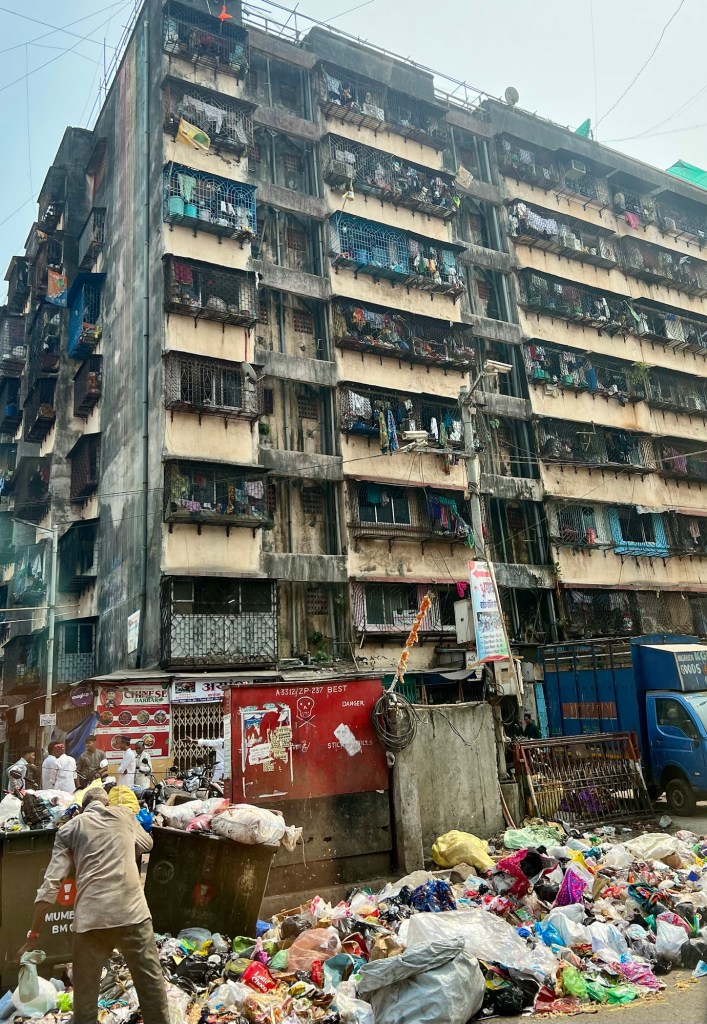
Yet all you have to do is look further up and there in the background is the skyscraper home of the richest man in India, a 27-story building with multiple helipads that houses his family of six. Another reminder of the vast disparity in wealth that is pervasive across the Country.
So beyond early observations on our transfer from the airport to our hotel, there are a couple of interesting things distinctive of Mumbai that stand out.
The Beach at Sunset

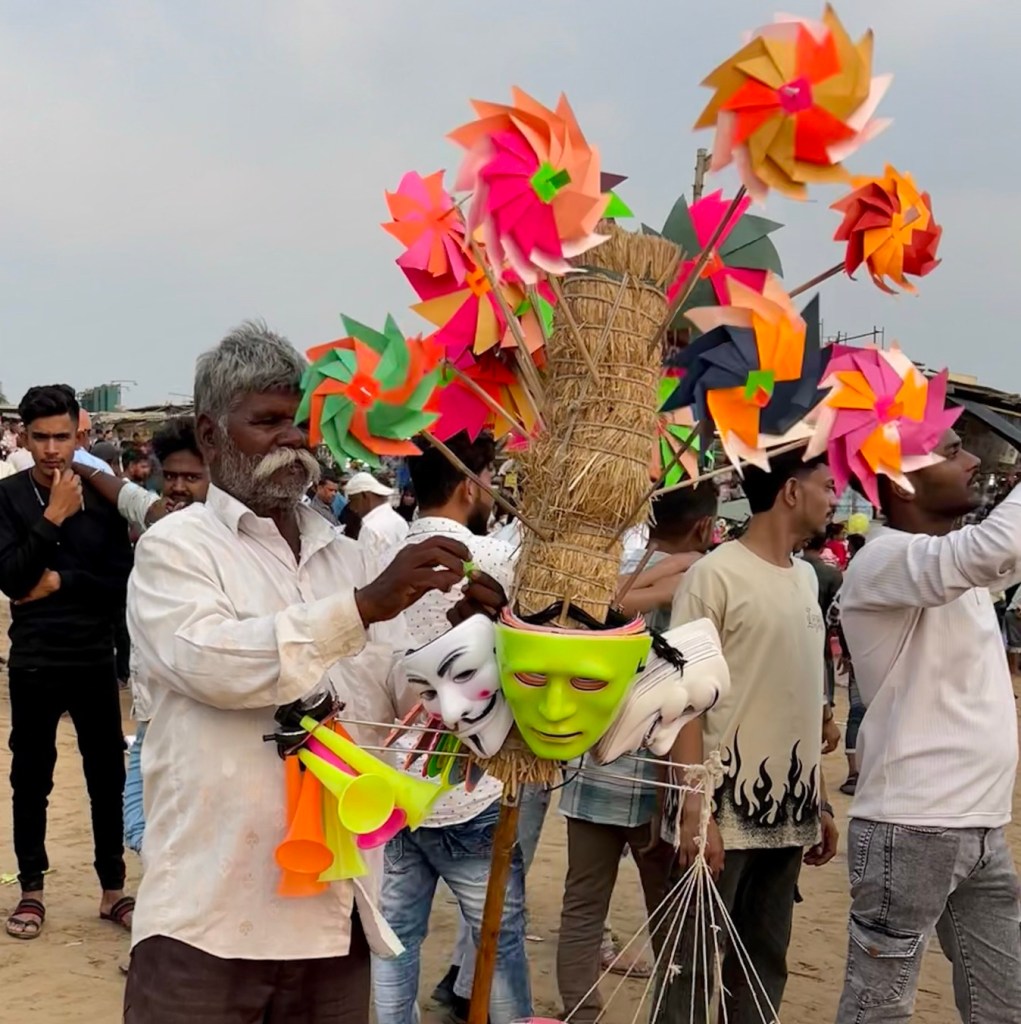
First and foremost, I simply have to share the Mumbai beach experience with you. The beaches here are utilized differently than anywhere else in the world I have been. It is not a scene of sunbathing, beach umbrellas and reggae, Jimmy Buffet tunes or steel drums. There is no basking in the sun or lounging around. In fact people don’t really head to the beach until the sun is low in the sky, primarily due to the heat.
Sunset is the big time, when thousands of people descend on the beach to enjoy the golden hour, socialize and get some air. I presume part of the draw is open space and fresh air, but even fulfillment of that pursuit is relative. In a city as populated as Mumbai—over 23 million people living in an area significantly smaller than New York City (which has a population of 8.8 million)—space is hard to come by. Even on the expansive beach it feels crowded. And the air, well, I have to say it is not exactly fresh. The air seems to be a greasy, grey haze that hangs heavy as far as the eye can see. Better on some days, worse on others.

Everyone is standing and/or slowly walking the beach. The atmosphere is carnival-like in energy, with some similar features. A few vendors selling fresh roasted corn on the cob or pinwheel fans, and a central strip of neon signed vendor booths reminiscent of Coney Island round out the scene. But the atmosphere is mostly conveyed by the jovial spirit of the people.


The Laundry

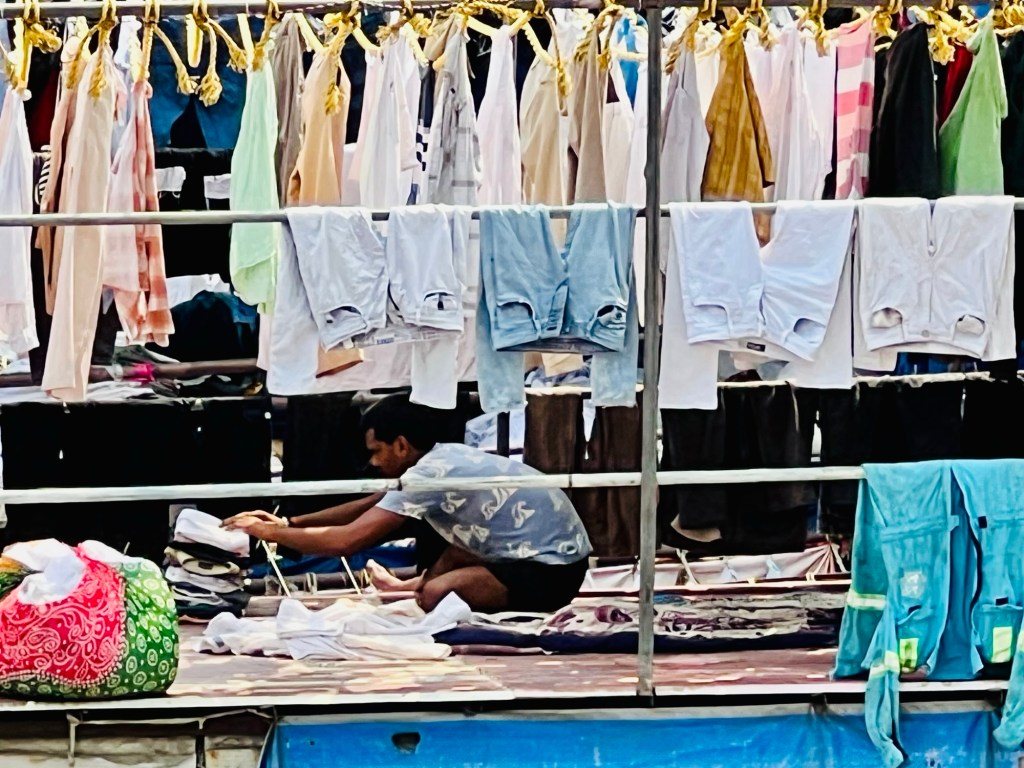
With its origin dating back more than 140 years, the Dhobi Ghat is India’s largest and oldest open air laundry. Each day more than 7,000 workers toil nearly around the clock to wash more than 100,000 garments from around the city. It is quite a site.
The laundry is a good example of how the slums work. Each slum is a center of industry. Some pick up, handle and sort recycling. Some do pottery. Others, leather work. And so on. The slums are actually epicenters of industry. And Dhobi Ghat is one of the most well known of them all.
It may be difficult to see all of the working details of the laundry in the images, but below all of the hanging clothes (at ground level) there are long concrete troughs of water where the clothing items are flogged on stones. Then, once clean, each item is hung to dry in the open air. The video may make it easier to get a sense of the place and how it works.
Gandhi’s House & Museum
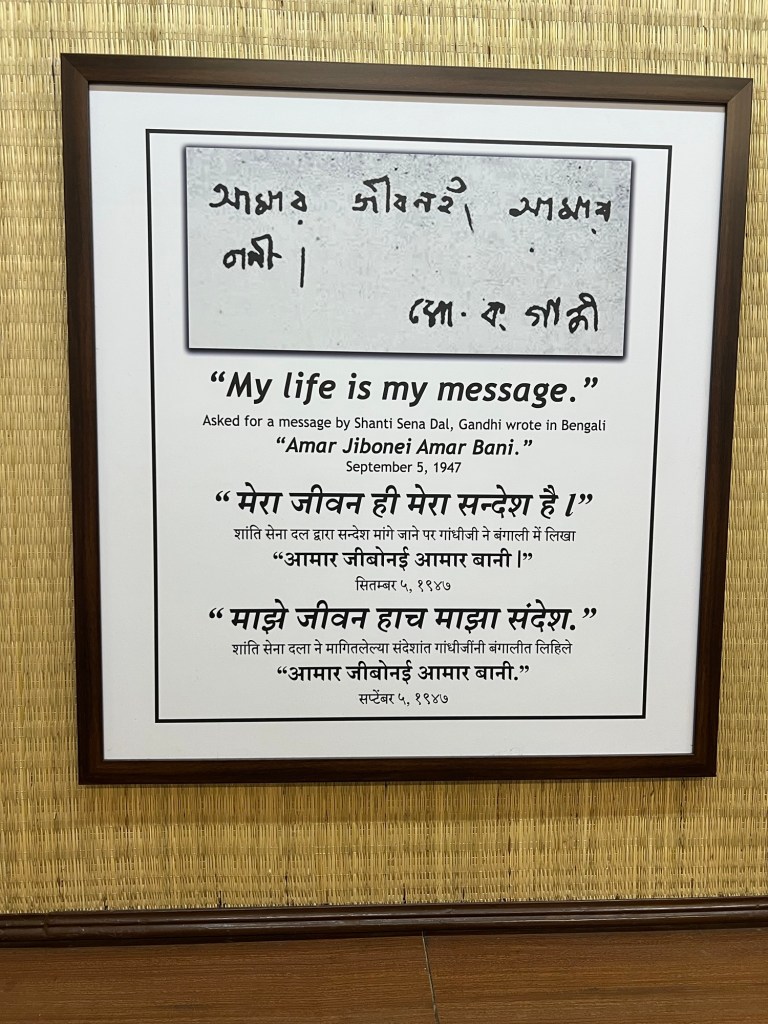
And finally, a nod to Gandhi, a humble and wise man whose basic ideals resonate to this day. We walked through the home where he lived for more than two decades, which is now a museum.
The site remains humble. It includes Gandhi’s room as it was when he lived there, containing: a simple bed on the floor, a place for writing, his spinning wheel, and three books (The Holy Bible, The Quran, and The Bhagavad Gita).
The rest of the building houses his full library, which has been supplemented over time, various artifacts, and significant writings he sent and received. It was particularly interesting to read his pleas for peace addressed to major world leaders including Adolph Hitler and Franklin Roosevelt at the time of WWII, and his advocacy for women.
So there is a sampling of our time in Mumbai. Until next time, know that we are safe and happy.
XOXO
 Notes to Mom